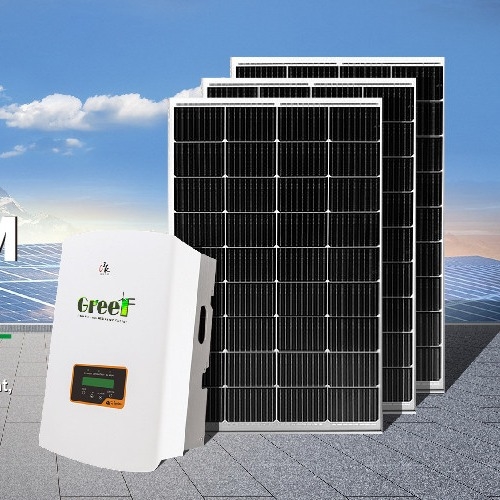
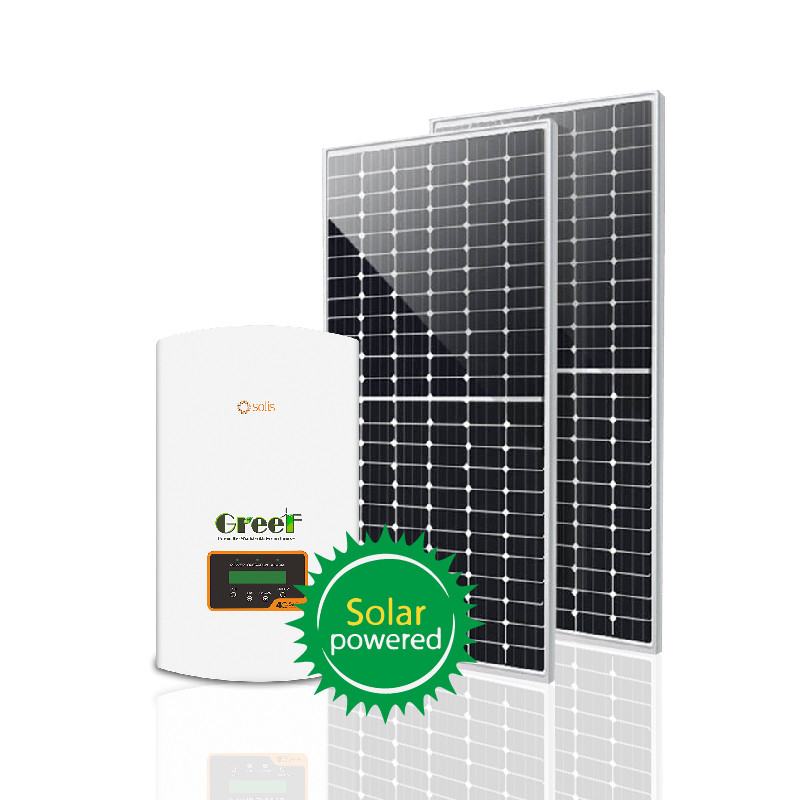
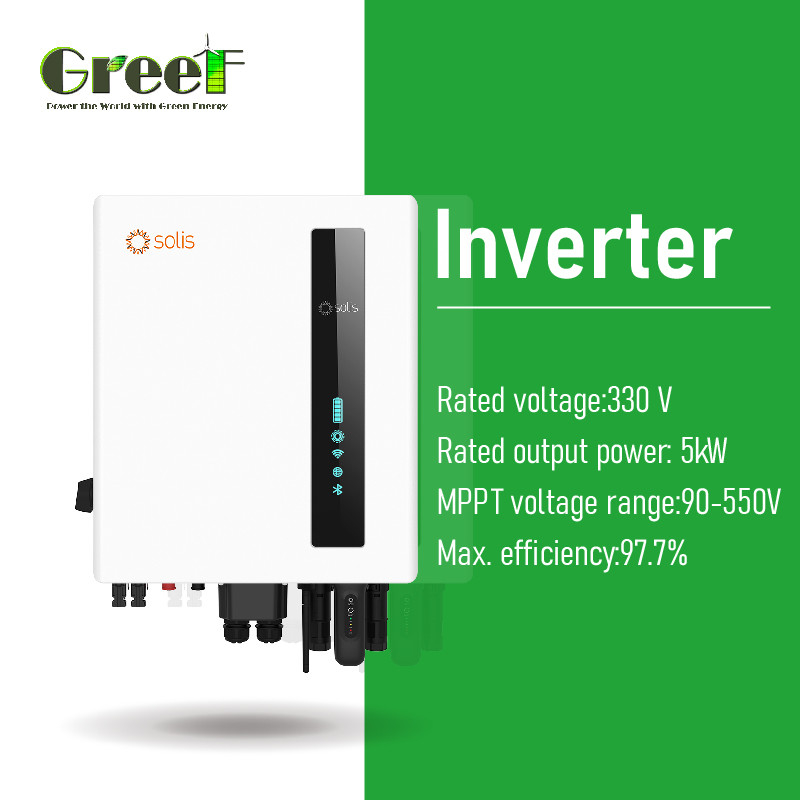
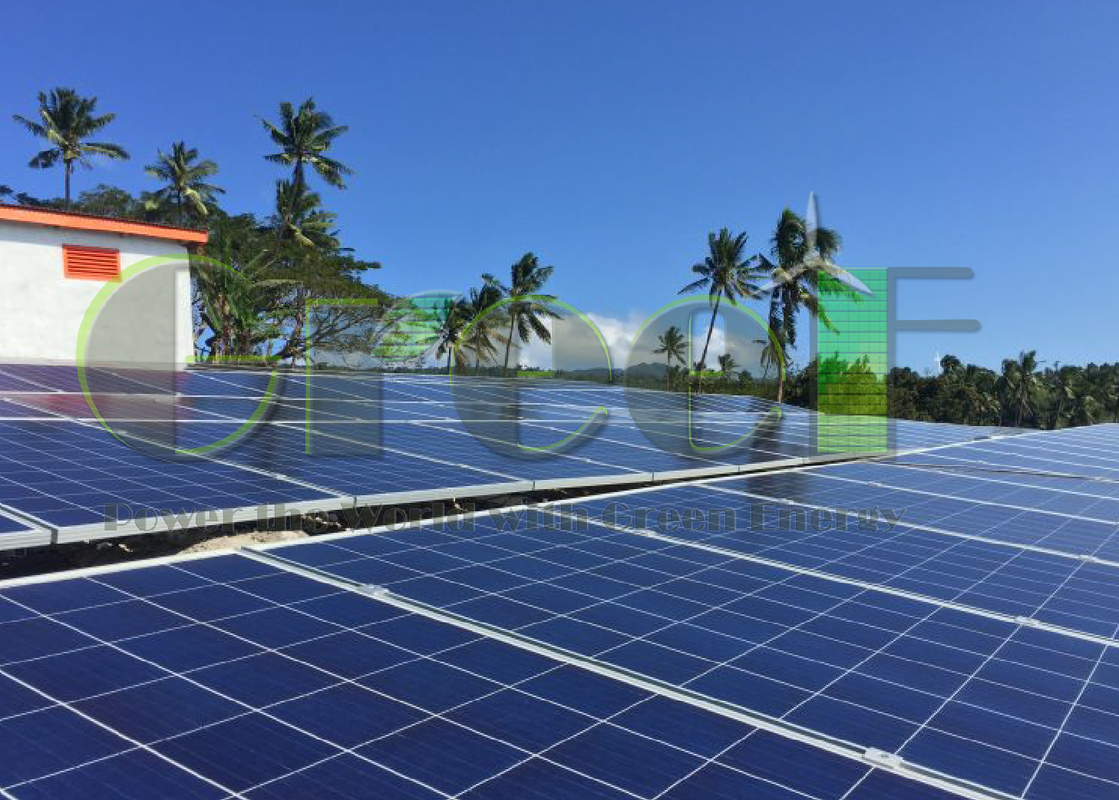
Podemos fazer soluções personalizadas de sistemas de geração solar de acordo com suas necessidades
As vantagens de um sistema solar ligado à rede refletem-se principalmente nos seguintes aspectos:
1Proteção do ambiente: o sistema de energia solar ligado à rede não gera ruído na produção de electricidade, nem polui o ar e a água,que esteja em conformidade com a estratégia de desenvolvimento económico e social sustentávelA economia de espaço: o sistema de energia solar ligado à rede adopta uma construção distribuída.e distribui a fonte de energia nas proximidades3. Baixo custo: o sistema de energia solar ligado à rede tem um custo de geração de energia relativamente baixo,que pode eliminar a bateria de armazenamento e melhorar o tempo médio livre de falhas do sistema4. Potência de saída flexível: o sistema fotovoltaico do sistema solar ligado à rede pode ser ajustado livremente de acordo com a capacidade efetiva necessária do sistema fotovoltaico, tornando o fornecimento de energia mais flexível. 5Benefícios ecológicos: os sistemas solares ligados à rede não têm um impacto excessivo no ambiente, em conformidade com a estratégia de desenvolvimento sustentável.Os sistemas ligados à rede solar trabalham intensamente durante o dia, o sol brilha durante muito tempo, o que pode satisfazer a necessidade das pessoas de eletricidade,e a eletricidade convertida a partir de energia luminosa pode compensar parte da tensão elétrica e aliviar a pressão do consumo de eletricidade localNo geral, o sistema de ligação à rede solar tem vantagens significativas em termos de protecção do ambiente, custo, flexibilidade, potência de saída, benefícios ambientais e modo de geração de energia.e é um excelente método de geração de energia renovável.
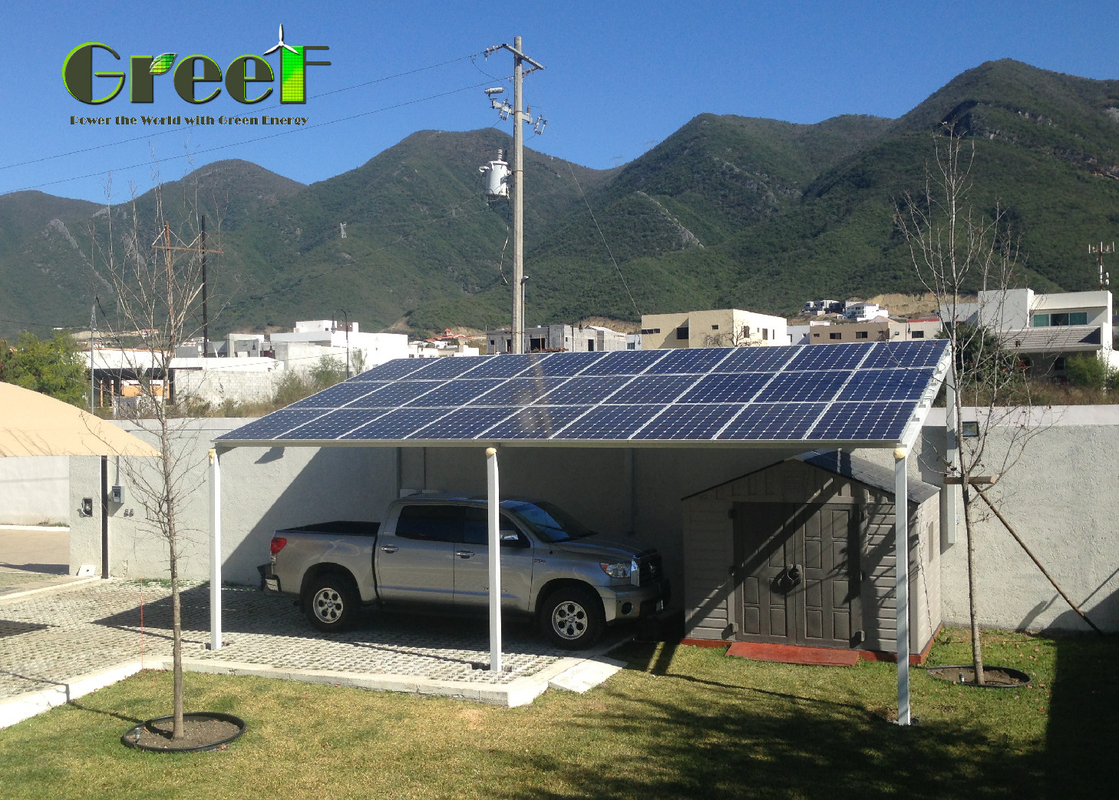
Caso do projecto
Por que escolher-nos
Avaliações e revisão
Avaliação Geral
5.0
Com base em 50 avaliações para este fornecedor
Instantâneo da Avaliação
A seguir, a distribuição de todas as classificações
My farm is 30 kilometers from town, and connecting to the power grid would cost a fortune. Three years ago, I installed a solar panel system with a battery bank. It was sufficient during spring, summer, and fall, but in winter, we often had a week of consecutive overcast days—and the batteries would run out in just three days. Last year, I decided to add a variable-pitch wind turbine, connected it to the AC coupling port of the Deye inverter, and set up a hybrid solar-wind system. Throughout the entire winter, the battery level never dropped below 45%, and I never had to work in the dark again. The Deye app allows me to monitor both the solar and wind turbine data simultaneously, and the transition between them is so smooth it’s almost imperceptible.
Relying solely on solar power during winter on a Nordic farm is a gamble. Only by combining a variable-pitch wind turbine with a Deye inverter—creating a wind-solar hybrid system—can you get through the winter with peace of mind.
I run a small dairy farm in northern Norway, far from the power grid. A few years ago, I installed solar panels and a Deye inverter, but the solar system basically stops working in winter, and the diesel generator was costing me a fortune. This year, I added this variable-pitch wind turbine and connected it to the Deye inverter for a hybrid solar-wind system, and we haven’t had a single power outage all winter. This wind turbine starts up at low wind speeds of just 2–3 on the Beaufort scale. During blizzards, the blades automatically pitch down to slow the turbine, preventing runaway speeds, and it’s much quieter than my neighbor’s fixed-pitch model. The Deye inverter’s switching logic is smart—it prioritizes solar power when available, and automatically switches to the wind turbine when solar output drops. It’s all clearly visible on the app. Now, the diesel generator is practically idle. Wind and solar backing each other up—that’s true off-grid freedom.
“I built a small pico hydro system on the creek behind my off-grid cabin. The water head is only 3 meters and flow rate around 0.2 m³/s – too low for most generators. This axial flux coreless unit starts generating usable power at just 150 RPM. No cogging, no iron loss, and it’s silent. I’m getting 300-400W continuously, 24/7. My old induction generator would barely light an LED at that speed. Absolutely perfect for low-head hydro.”
Avaliação Geral
Instantâneo da Avaliação
A seguir, a distribuição de todas as classificaçõesTodos os comentários